
How Much Does Web Design Cost in New Hampshire? 2026 Pricing Guide
In 2026, a professionally designed small business website in New Hampshire may cost approximately $2,500 to $15,000. A simple template-based website may cost less, while a custom lead-generation website, e-commerce store, or complex build can cost $10,000 to $30,000 or more.
That is a wide range because no two website projects have exactly the same requirements. A local contractor may need service pages, project galleries, reviews, quote forms, and service-area content. Another business may only need a few pages that explain what it does and how to get in touch.
This guide explains what New Hampshire businesses can expect to pay, which factors affect the final price, and how to compare web design proposals based on value rather than the lowest number.
Web Design Cost in New Hampshire at a Glance
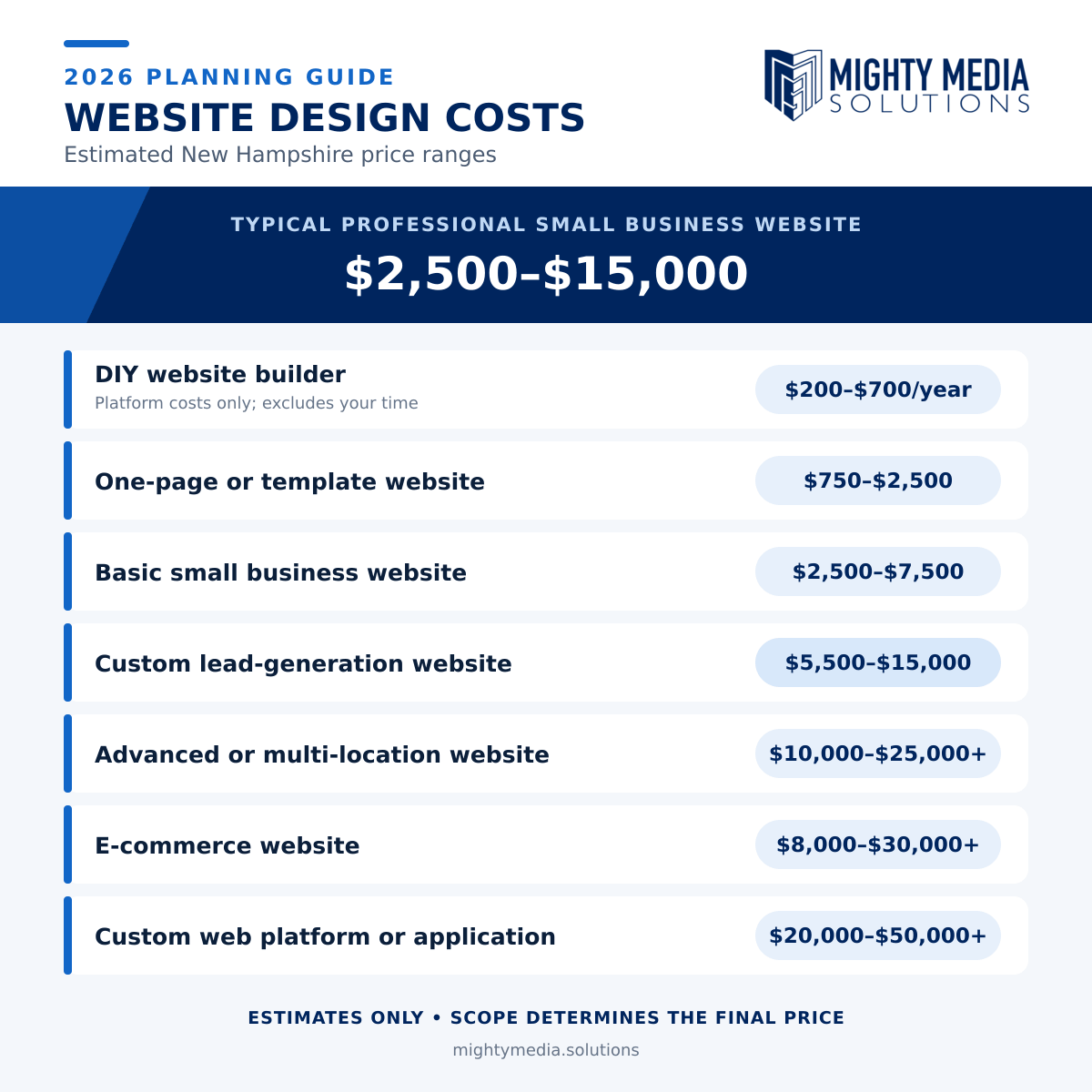
The figures below provide a general planning guide. They are not fixed quotes, and the cost of an individual project will depend on its scope.
Website type | Estimated price range |
DIY website builder | $200–$700 per year, excluding your time |
One-page or template website | $750–$2,500 |
Basic small business website | $2,500–$7,500 |
Custom lead-generation website | $5,500–$15,000 |
Advanced or multi-location website | $10,000–$25,000+ |
E-commerce website | $8,000–$30,000+ |
Custom web platform or application | $20,000–$50,000+ |
When reviewing these ranges, consider what the website needs to accomplish. A website that only confirms your business exists is very different from one designed to generate calls, quote requests, appointments, or online sales.
Why Do Web Design Quotes Vary So Much?
The phrase “website design” can describe anything from customizing a ready-made template to planning and developing a completely custom digital platform. Two proposals may look similar on the surface while including very different levels of research, content, design, SEO, testing, and support.
A lower-priced proposal may cover only the design and technical setup. You may need to provide all the written content, photographs, brand assets, page structure, and SEO direction yourself.
A more comprehensive project may include discovery, strategy, copywriting, original photography, mobile optimization, conversion planning, analytics, and launch support. These services require a greater investment, but they also produce a website that is better equipped to support the business.
What Determines the Cost of a Business Website?
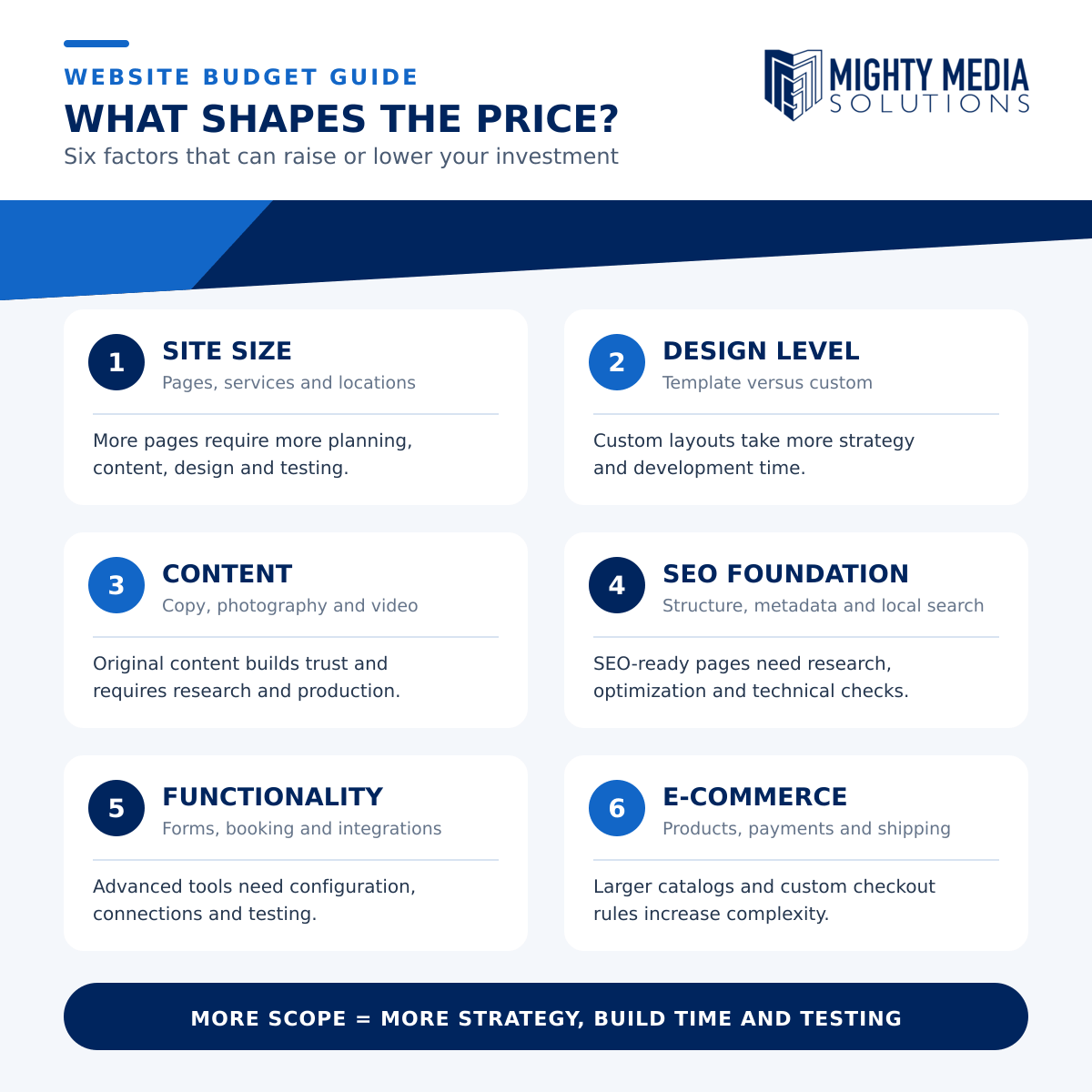
Several factors influence how much a website costs in New Hampshire.
Number of Pages
A five-page website generally costs less than a 25-page website. Every additional page may require planning, writing, design, image selection, development, optimization, and testing.
A small business website commonly includes:
- Home
- About
- Services
- Individual service pages
- Service-area pages
- Project gallery or portfolio
- Testimonials
- Blog or resources
- Frequently asked questions
- Contact
For contractors and service businesses, placing every service on one general page may limit how clearly the website answers customers’ questions. Individual service pages provide more room to explain each offering and target relevant searches.
Template or Custom Design
Template-based websites use an existing layout that can be adjusted with your colors, logo, images, and content. They can be practical for new businesses with simple requirements and limited budgets.
A custom website is planned around your brand, customers, services, and goals. Custom layouts require more design and development work, but they provide greater control over how people move through the website and respond to calls to action.
Copywriting and Content
Your website needs more than attractive visuals. Its content must explain what you do, where you work, why customers should trust you, and what they should do next.
Professional copywriting can raise the initial cost because it involves research, interviews, planning, writing, and editing. However, clear content can also prevent confusion and help qualified visitors decide whether your business is right for them.
Original Photography and Video
Stock photography can fill an empty space, but it cannot show your actual team, workmanship, equipment, or completed projects. Original photos and video are especially valuable for contractors because prospective customers want evidence of the people and work behind the business.
Photography, video production, editing, and image optimization may be included in a proposal or quoted separately. Confirm this before comparing prices.
Search Engine Optimization
An SEO-ready website may include keyword research, page titles, meta descriptions, logical navigation, internal links, image optimization, and a structure that search engines can understand.
Google explains that SEO best practices can make it easier for search engines to crawl, index, and understand website content. However, no website designer or SEO company can guarantee a number-one ranking.
Basic launch optimization and an ongoing SEO strategy are also different services. Building a strong foundation gives the website a better starting point, while ongoing SEO may involve new content, technical improvements, local optimization, and performance analysis.
Mobile Design and Performance
Customers may visit your website from a phone while comparing companies, looking for an emergency service, or standing at a job site. Buttons, menus, forms, and phone numbers need to work properly on smaller screens.
Google recommends responsive web design because it is straightforward to implement and maintain. Google’s Core Web Vitals also measure loading performance, responsiveness, and visual stability. Reaching strong performance standards can require additional development and testing.
Forms, Booking Tools, and Integrations
A standard contact form is relatively simple. Advanced quote forms, appointment scheduling, customer portals, payment tools, email automation, and CRM connections require more configuration and testing.
Before requesting a quote, list every tool the website must connect with. Adding integrations after development has started may increase the cost and extend the timeline.
E-Commerce Functionality
An e-commerce website needs more than product pages. It may also require secure payment processing, product variations, inventory management, shipping rules, sales tax settings, customer emails, discount codes, and checkout testing.
The number of products and complexity of the buying process can significantly affect the final cost. A small store with a limited catalog will generally cost less than a large store with custom shipping, subscription, or inventory requirements.
How Much Does a Contractor Website Cost?
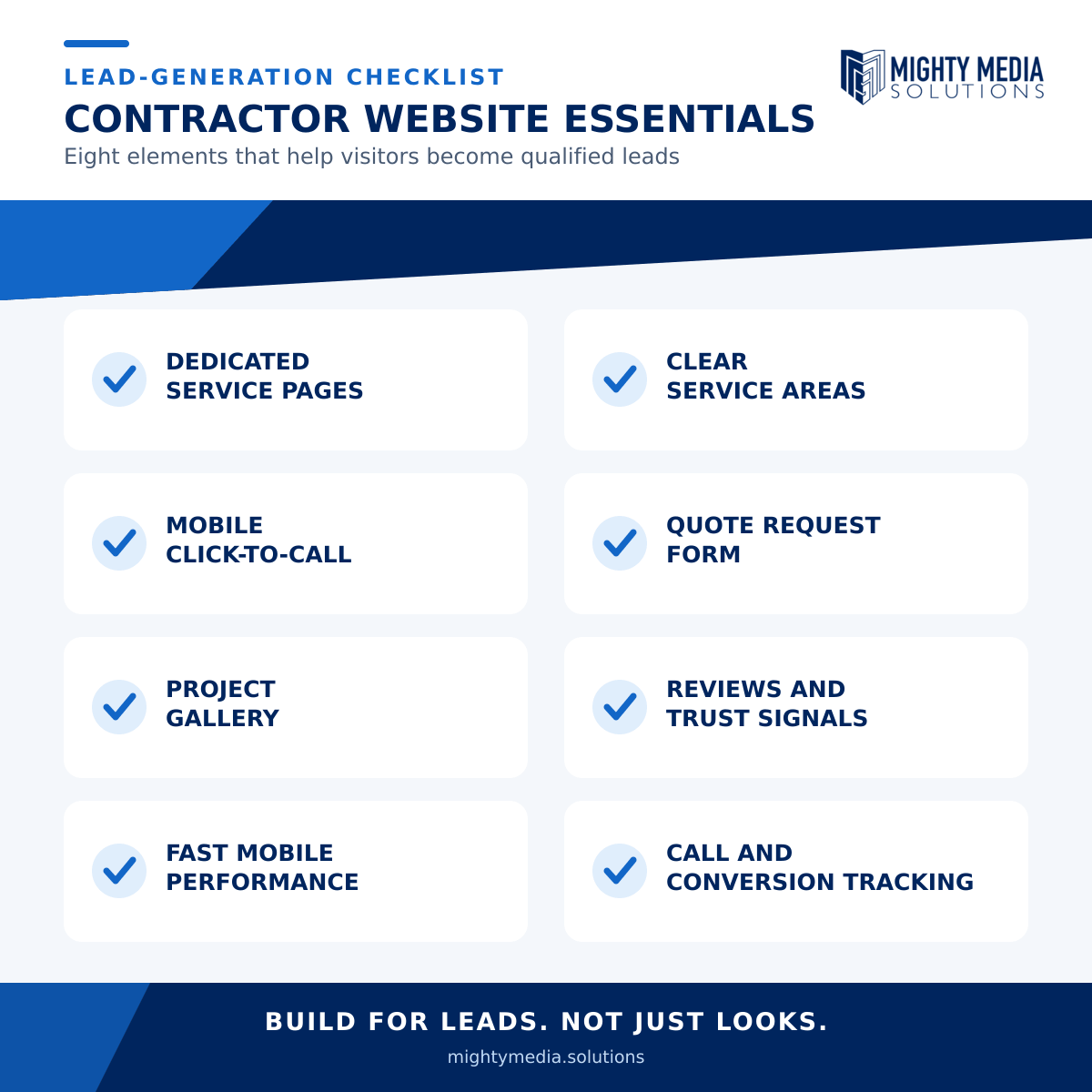
A professionally built contractor website may fall between $5,000 and $15,000, depending on the number of services, locations, project examples, and lead-generation features required. More advanced sites may cost more.
A strong contractor website often needs:
- A separate page for each primary service
- Clear service-area information
- Click-to-call buttons for mobile visitors
- Quote or estimate request forms
- Reviews and customer testimonials
- Before-and-after photographs
- Project galleries or case studies
- Trust signals, licenses, awards, or affiliations
- Conversion and call tracking
- A simple way to update projects and content
These features turn the website into more than an online brochure. They help visitors evaluate the company, understand its services, and take the next step.
Is a Cheap Website a Bad Website?
Not necessarily. A template or DIY website may be suitable for a new business that needs a simple online presence. The important question is whether it can meet your current needs without creating expensive problems later.
Before choosing a low-cost option, determine whether it includes:
- Mobile-responsive design
- Ownership of the website and its content
- A custom domain
- Secure hosting and backups
- Contact form testing
- Basic SEO settings
- Analytics access
- Technical support
- The ability to add new pages
A low initial price may not include content, ongoing edits, software fees, security, or support. Review both the upfront expense and the long-term cost of operating the website.
Should You Redesign Your Website or Start Over?
A redesign may be enough when the current website has a reliable technical foundation but needs clearer content, updated branding, improved navigation, or stronger calls to action.
Starting over may be more practical when the existing site:
- Is difficult to use on mobile devices
- Loads slowly or regularly breaks
- Uses unsupported software
- Cannot be updated easily
- No longer reflects your services or brand
- Has a confusing page structure
- Does not generate or track leads
- Cannot support the features you need
A web designer should review the current site before recommending either option. Reusing a weak foundation simply to lower the initial price can make future improvements more difficult.
What Costs Continue After the Website Launches?
A website requires ongoing care. Ask whether the proposal includes or excludes the following expenses:
- Domain renewal
- Website hosting
- Security monitoring
- Software or plugin licenses
- Backups
- Technical maintenance
- Content updates
- Performance monitoring
- SEO services
- Analytics and conversion tracking
Some companies charge these costs separately, while others offer a monthly support plan. Neither structure is automatically better. The right option depends on how often the website changes and whether your team wants to manage it internally.
How Long Does It Take to Build a Website?
A small professional website may take approximately four to eight weeks. A larger custom website may take eight to 16 weeks or longer.
The timeline depends on the number of pages, design complexity, content creation, photography, integrations, feedback, and approval process. Projects usually move faster when the business has a clear decision-maker and provides requested information promptly.
Ask prospective web designers for a realistic schedule, important milestones, and a list of items they need from you. An unusually fast estimate may assume that all content and brand materials are already prepared.
How to Compare Web Design Proposals
Do not compare proposals based only on the final number. Confirm that each company is pricing the same scope and level of service.
Ask these questions before making a decision:
- How many pages are included?
- Is the design custom or based on a template?
- Who writes and edits the content?
- Are photography or video included?
- What SEO work is completed before launch?
- Are analytics and lead tracking configured?
- Who owns the domain, website, and content?
- Are hosting and maintenance included?
- How many rounds of revisions are allowed?
- What happens if the project scope changes?
- Will the team provide training after launch?
- Can the website grow as the business adds services or locations?
Clear answers make it easier to understand what you are purchasing and reduce the likelihood of unexpected expenses.
Choose a Website Based on the Results You Need
The right website budget depends on the role the site will play in your business. If you only need a professional place to send referrals, a simple site may be sufficient. If you expect the website to attract search traffic, build trust, generate leads, and support advertising, you will need a more complete strategy.
Mighty Media Solutions creates custom, mobile-friendly websites designed to reflect each business and turn more visitors into customers. Explore our current website design options and pricing to see what is included, or contact Mighty Media Solutions to discuss your goals.
Frequently Asked Questions
How much should a small business website cost?
A professional small business website may cost approximately $2,500 to $15,000. The final price depends on the number of pages, design, content, SEO, photography, integrations, and support included.
How much does a contractor website cost?
A contractor website may cost around $5,000 to $15,000 or more. Websites with multiple service pages, location content, project galleries, custom forms, photography, and lead tracking generally require a larger investment.
Is SEO included in website design?
Some web design packages include basic on-page and technical SEO. Ongoing SEO, content development, local optimization, and reporting are usually separate services. Ask the provider to explain exactly what its proposal includes.
Do I own my website after it is completed?
Ownership depends on the agreement. Before signing, ask who will own the domain, design, written content, photographs, hosting account, and administrative access after launch.
How much does website maintenance cost?
Maintenance costs vary based on the website platform and the amount of support required. A basic site may only need software updates, backups, and security checks, while an active e-commerce or lead-generation site may require regular technical and content updates.
Can I build my own business website?
Yes. A DIY builder can work for a simple website if you have time to plan the structure, write the content, select images, configure basic SEO, and maintain the site. A professional designer may be a better fit when the website needs to generate leads, integrate with other systems, or represent an established brand.